

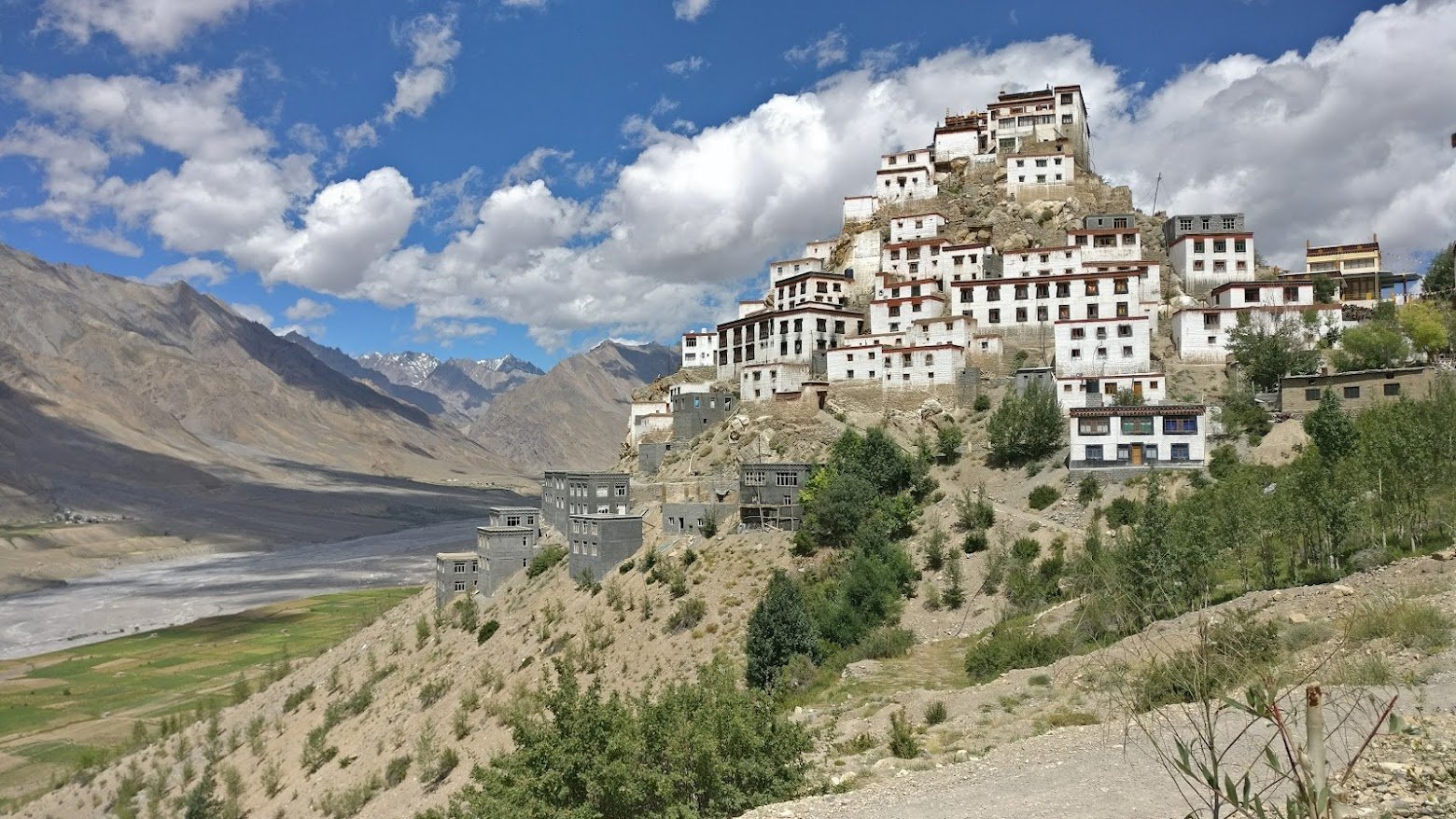
Spiti Valley vs Ladakh — Which Should You Choose for Your Next Trip?
If you’ve been scrolling through travel photos and found yourself torn between two of India’s most dramatic high-altitude destinations, you’re not alone. Spiti Valley and Ladakh both sit above 3,000 metres, both offer jaw-dropping landscapes, ancient monasteries, and a sense of being completely cut off from the ordinary world — yet they are strikingly different experiences.
So which one should you choose? The honest answer: it depends on what kind of traveller you are. This guide breaks down everything you need to know to make the right call.
Quick Overview
| Spiti Valley | Ladakh | |
| Location | Himachal Pradesh | Union Territory of J&K / Ladakh |
| Base town | Kaza | Leh |
| Altitude | 3,800m – 4,500m | 3,500m – 5,300m+ |
| Best time | June – October | June – September |
| Crowd level | Low–Moderate | High (peak season) |
| Vibe | Raw, offbeat, remote | Adventurous, well-touristed |
| Road condition | Challenging | Better on main circuits |
| Budget | Moderate | Moderate–High |
The Landscape: Similar but Different
Both destinations belong to the cold desert Himalayan belt, which means you’ll find barren brown mountains, impossibly blue skies, and rivers cutting through ancient valleys in both places.
Ladakh is bigger, more dramatic, and more varied. The Nubra Valley gives you sand dunes next to snowcapped peaks. Pangong Tso stretches across the Indo-China border in shades of blue that shift by the hour. Zanskar adds another level of remoteness if you’re willing to push further.
Spiti Valley is narrower and more intimate. The Pin Valley National Park, the village of Langza with its Buddha statue watching over the plains, and the otherworldly Chandratal Lake have a quieter, more meditative quality. Spiti doesn’t feel like it’s performing for you — it simply exists, indifferent and spectacular.
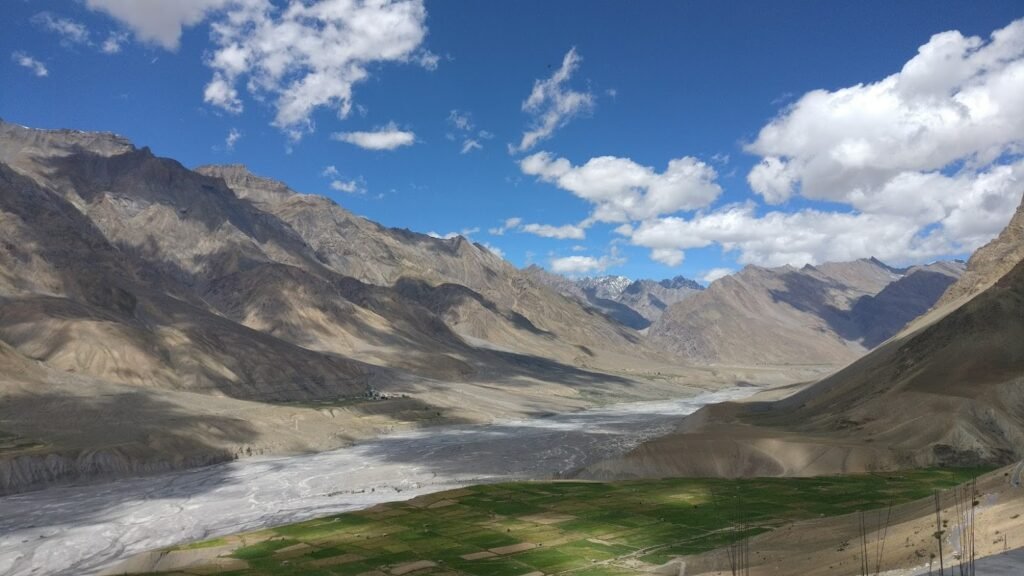
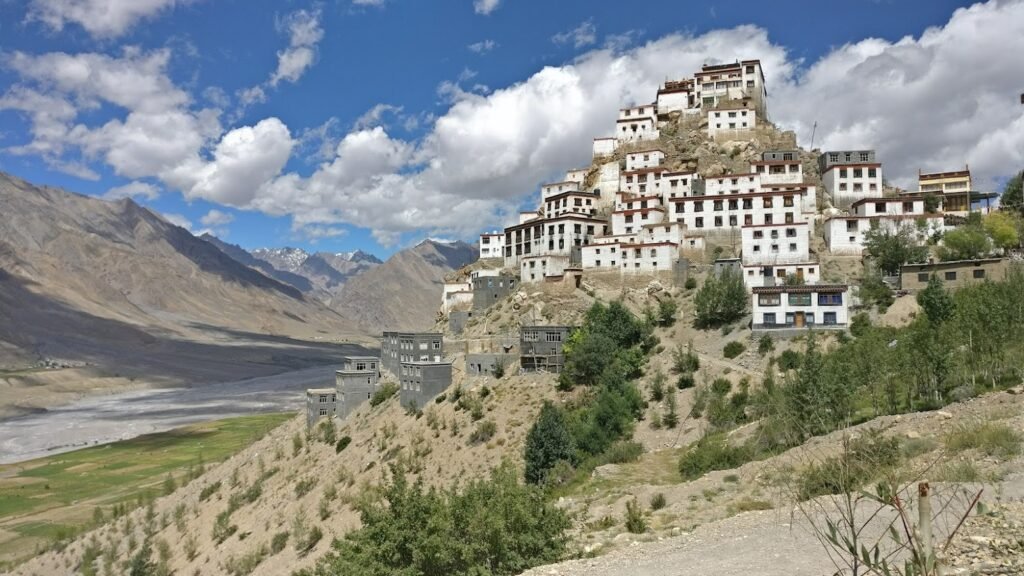
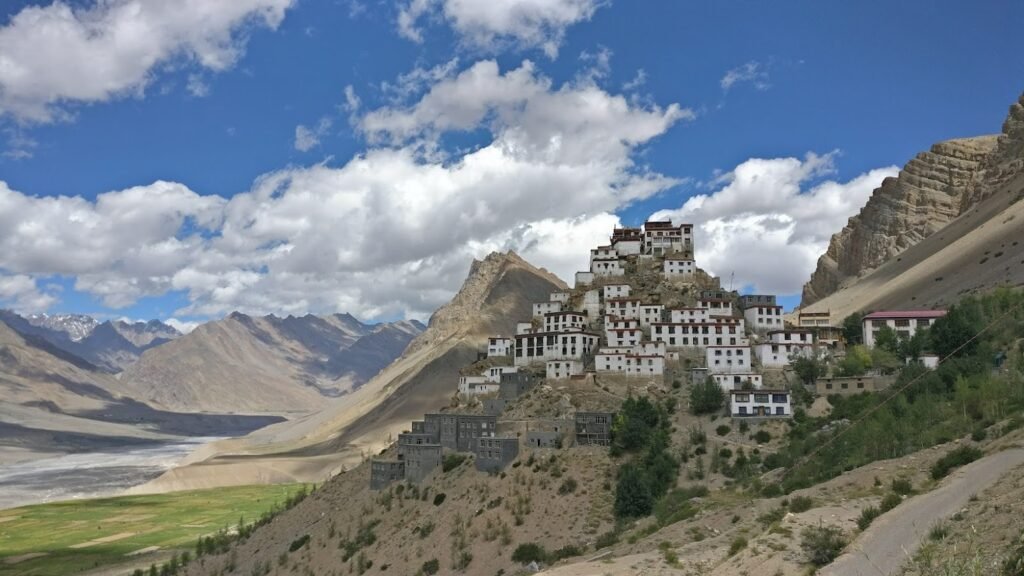
Verdict: If you want scale and visual drama, Ladakh wins. If you want raw, unfiltered mountain solitude, Spiti is unmatched.
Accessibility: How Hard Is It to Get There?
Ladakh is easier to reach. You can fly directly into Leh from Delhi, Mumbai, or Srinagar in about an hour. Road access via Manali–Leh Highway or Srinagar–Leh Highway is also an option for those who prefer a road trip. The airport makes acclimatisation planning more structured.
Spiti Valley has no airport. You drive in — either from Shimla via the Hindustan-Tibet Highway (longer but gentler), or from Manali via the Rohtang Pass (more dramatic but shorter). Both routes involve narrow mountain roads, steep drops, and sections with no guardrails.
Verdict: Ladakh is more accessible. Spiti requires more commitment — but rewards it.
Crowds: How Busy Does It Get?
This is where Spiti Valley has a clear edge for travellers seeking quieter experiences. Ladakh, particularly Leh, Pangong, and Nubra Valley, has become very popular. During peak season (July–August), you’ll share the famous Pangong viewpoints with dozens of other tourists, and hotel prices in Leh reflect the demand.
Spiti sees far fewer tourists. The villages of Kibber, Langza, and Hikkim (home to the world’s highest post office) still feel genuinely off the beaten path. You can sit at Key Monastery at sunrise with barely anyone around.
Verdict: For peace and solitude, Spiti Valley wins comfortably.
Monasteries and Culture
Both regions are deeply Buddhist and home to some of India’s most ancient and beautiful monasteries.
Ladakh’s Thiksey, Hemis, Diskit, and Alchi monasteries are stunning and well-preserved, with Hemis hosting India’s largest Tibetan Buddhist festival in June–July. The Shanti Stupa above Leh offers one of the most iconic sunset views in the Himalayas.
Spiti’s Key Monastery is the crown jewel — a 1,000-year-old fortress monastery perched on a hill at 4,166m. Dhankar Monastery, balanced precariously on a cliff above the confluence of the Spiti and Pin rivers, looks like something from a dream. Tabo Monastery, founded in 996 AD, is one of the oldest continuously functioning monasteries in the Himalayas.
Verdict: It’s a draw — both regions offer world-class monastery experiences. Spiti’s feel more intimate; Ladakh’s are more accessible.
Adventure Activities
Ladakh has a more developed adventure tourism infrastructure:
- Chadar Trek (frozen Zanskar River, January–February)
- Markha Valley Trek
- White water rafting on the Zanskar River
- Mountain biking on the Manali–Leh Highway
- Khardung La Pass (one of the world’s highest motorable roads)
Spiti is more raw but equally thrilling:
- Chandratal Lake trek
- Pin–Parvati Pass crossing (serious trekkers only)
- Snow leopard safari in winter
- Cycling from Manali to Spiti
- Fossil hunting in Langza (marine fossils at 4,400m)
Verdict: Ladakh has more variety and organised adventure options. Spiti is better for self-reliant adventurers.
Budget: What Will It Cost?
Ladakh tends to be more expensive, especially if you fly in. Accommodation in Leh during peak season can be pricey, and permits for Nubra, Pangong, and other restricted areas add to the cost. Expect to spend Rs 3,000–5,000 per person per day on a mid-range trip.
Spiti is more affordable. Homestays in villages like Kaza, Langza, and Kibber are budget-friendly and often include meals. You’ll spend Rs 1,500–3,000 per person per day comfortably on a self-planned trip.
Verdict: Spiti Valley is easier on the wallet.
Best Time to Visit
Spiti Valley: June to October. The valley is cut off by snow from November to May. September–October is ideal for clear skies and thinner crowds.
Ladakh: June to September for most travellers. The Chadar Trek runs January–February for the very adventurous. July–August is the busiest and most expensive period.
So, Which Should You Choose?
Choose Spiti Valley if:
- You want solitude and raw, unfiltered mountain landscapes
- You enjoy road trips and don’t mind challenging drives
- You’re on a tighter budget
- You prefer offbeat experiences over tourist circuits
- You want to visit ancient monasteries without tour groups around you
Choose Ladakh if:
- You want easier access (especially by flight)
- You prefer a wider variety of landscapes in one trip (desert, lakes, valleys)
- You’re keen on organised adventure sports
- It’s your first high-altitude Himalayan trip
- You want the classic ‘India’s most spectacular destination’ experience
Can’t decide? Do both. A combined Spiti + Ladakh road trip over 15–18 days is one of India’s great adventures — Manali → Spiti → Leh → Nubra → Pangong → fly out.
Plan Your Trip with KindQuest Travel
At KindQuest Travel, we specialise in curated Spiti Valley and Ladakh packages that handle all the logistics — permits, accommodation, transport, and local guides — so you can focus entirely on the experience. Whether you want a 6-day Spiti escape or a 10-day Ladakh adventure, we’ll build the right itinerary for you.
Contact us today to start planning your high-altitude journey.
