
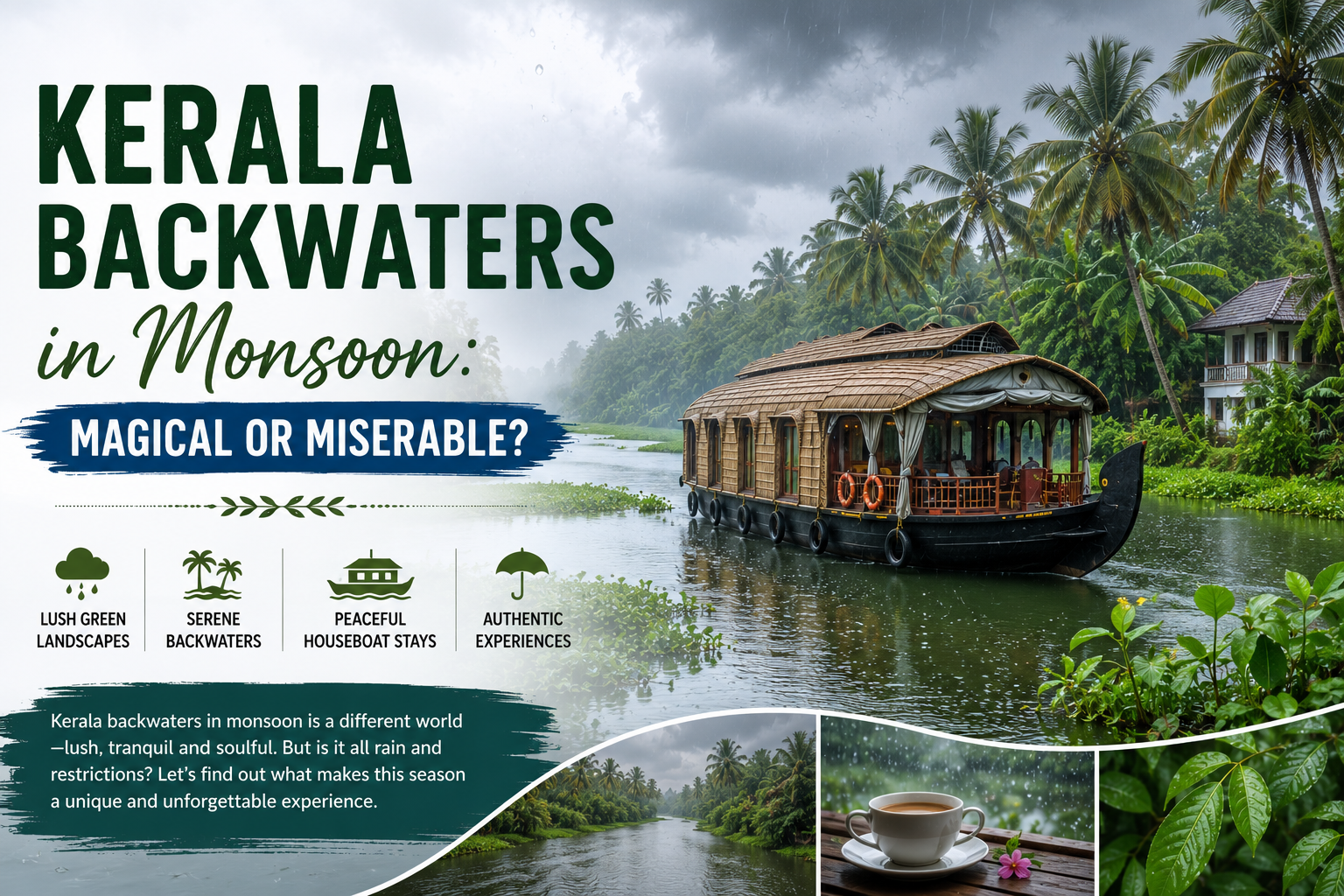
Kerala Backwaters in Monsoon: Magical or Miserable?
You type “Kerala backwaters” into a search bar and every image shows the same thing — golden hour light, still green water, a white houseboat gliding silently past swaying palms. What those images never show you is what happens when the monsoon arrives, the skies turn the colour of slate, and the rain falls so hard it bounces off the water.
Is Kerala during the monsoon a hidden gem that most travellers miss? Or does it turn a dream holiday into a soggy disappointment?
We answer both honestly. Kerala’s backwaters in monsoon are not for every traveller — but for the right person, they offer an experience so atmospheric and so different from anything the peak season delivers that travellers who go once want to return every monsoon season.
When Does Monsoon Season Hit Kerala?
Kerala receives two distinct monsoon periods every year, which gives it one of the longest and heaviest annual rainfalls of any Indian state.
| Monsoon Period | When It Occurs & What It Means for Backwater Travel |
| Southwest Monsoon | June to September. The main monsoon. Heavy, sustained rainfall arrives from the Arabian Sea. This is the wet season most travellers refer to when they ask about monsoon Kerala. |
| Northeast Monsoon | October to November. A second wave of rain, lighter than the southwest monsoon but still significant. Affects mainly central and north Kerala. |
| Peak Rain Weeks | Late June through August. The heaviest rainfall. Alleppey and Kumarakom receive some of their highest monthly rainfall totals during these weeks. |
| Early Monsoon (June) | Often the most dramatic — the first rains arrive with intensity. Visually stunning but infrastructure can be disrupted. |
| Late Monsoon (September) | Rain tapers, greenery peaks, crowds remain low. Many experienced travellers consider this the sweet spot of monsoon travel. |
What Kerala Backwaters Actually Look Like in Monsoon
Here is the honest picture — not the tourism brochure version, and not the horror story version either.
The Water
The backwaters swell. Water levels rise visibly, and in some areas the boundary between land and water blurs completely. Villages that sit a metre above the waterline in winter suddenly look like they float. The effect is dramatic and beautiful in a way that dry-season Kerala simply cannot match.
The Colour
Monsoon transforms the palette of Kerala entirely. The coconut palms reach a green so saturated it looks unreal. The water shifts from the clear blue-green of winter to a deeper, darker jade. Mist settles over the wider lakes of Vembanad and Ashtamudi in the early morning and the effect is more Scottish Highlands than South India.
The Rain Itself
Some days bring hours of uninterrupted heavy rain. Other days bring intense bursts that last twenty minutes and then stop completely. You rarely know which day you will get. Sitting on a covered houseboat deck and watching a monsoon squall move across the water is one of the most memorable experiences Kerala offers. Standing in it without cover is considerably less enjoyable.
The Sound
Rain on a houseboat canopy creates a percussion that drowns conversation and makes sleep surprisingly deep. The frogs begin at dusk and the birdsong at dawn sounds different — more urgent, more layered — than anything you hear in the dry season. If you travel for sensory experiences rather than sightseeing, monsoon Kerala rewards every sense.
| ✨ The Magic in Plain Terms Kerala in monsoon feels ancient and unhurried in a way the peak season does not. The tourists stay away. The prices drop. The landscape turns a green that photographers chase. The rain gives you permission to sit still and simply be somewhere beautiful without the pressure to tick off attractions. |
The Honest Challenges: Where Monsoon Kerala Can Disappoint
We believe in honest travel advice. Monsoon Kerala has genuine challenges, and understanding them before you book prevents disappointment.
Some Outdoor Activities Stop Completely
Canoe trips through narrow village waterways — one of the best backwater experiences available — become impossible in heavy rain or strong currents. Some boat operators suspend services during the peak of the monsoon. If you book a Kerala trip primarily to kayak the backwaters at sunrise, monsoon is not your season.
Heat and Humidity Intensify
Kerala’s monsoon is not cool. Temperature drops slightly but humidity rises significantly. Between rain showers, the air feels thick and warm. Travellers who struggle in humid conditions find monsoon Kerala physically uncomfortable in a way that hill destinations like Munnar — where the monsoon is far more pleasant — do not produce.
Transport Can Get Disrupted
Heavy rainfall occasionally floods road sections, delays ferries, and creates access difficulties to remote homestays. This rarely causes serious problems for travellers staying in well-connected locations like Alleppey town or Kumarakom resort areas, but it can affect those seeking off-the-beaten-path experiences.
Photography Requires Patience
The flat grey light of overcast monsoon days produces flat photographs. The magic of monsoon Kerala appears in atmospheric moments — mist on the water, rain patterns on the surface, lamp-lit houseboats at dusk — rather than in the bright, saturated landscape shots that dominate travel photography. If you travel primarily to photograph Kerala, you need patience and skill to capture what makes monsoon beautiful.
Not All Houseboat Operators Stay Open
A significant number of houseboats and budget guesthouses in Alleppey close between June and August. The ones that remain open often run special monsoon pricing. Book through a trusted travel partner to avoid arriving at a closed property or a vessel that has not been maintained through the off-season.
| ⚠️ Important: Plan With a Reliable Partner Monsoon travel in Kerala requires more planning than peak season travel. Flexible itineraries, confirmed monsoon-open properties, and a local contact who knows current water levels and operator availability make the difference between a trip that feels magical and one that feels stressful. |
Who Should Travel to Kerala Backwaters in Monsoon
| Go in Monsoon If You Are… | Reconsider If You Are… |
| A slow traveller who values atmosphere over activities | Someone who booked specifically to kayak, paddle, or swim |
| A couple seeking a quiet, intimate escape | A family with young children who need reliable outdoor time |
| A photographer comfortable with moody, atmospheric light | A photographer who needs bright, clear skies for landscape shots |
| Travelling on a budget and want value-for-money rates | Someone with a rigid, activity-packed itinerary |
| An Ayurveda seeker (treatments are most potent in monsoon season, according to Ayurvedic tradition) | A traveller who struggles badly with heat and humidity |
| Someone who finds peak-season crowds exhausting | Someone visiting Kerala for the first time who wants the full picture-postcard experience |
Alleppey vs Kumarakom: Which Works Better in Monsoon?
Both destinations sit on the Vembanad backwater system and both receive heavy monsoon rainfall. They feel quite different during the wet season.
Alleppey (Alappuzha) in Monsoon
Alleppey has a network of canals running through town, and the monsoon fills these completely. The town itself remains accessible and active. More houseboats operate here than anywhere else in Kerala, and a greater number of operators stay open through the monsoon. The beach at Alleppey becomes dramatic in monsoon — rough waves, empty sands, and a complete absence of the weekend crowds that fill it in winter.
Kumarakom in Monsoon
Kumarakom sits on the eastern shore of Vembanad Lake and offers a more resort-focused experience. Several luxury properties here specifically market monsoon packages and include Ayurveda treatments, which they run year-round. The bird sanctuary at Kumarakom remains accessible in monsoon and the birding is actually excellent — many migratory species arrive with the rains.
| 🏡 KindQuest Travel Recommendation For a first monsoon backwater experience, Alleppey gives you more flexibility — more operators to choose from, a town to explore on rainy days, and a range of accommodation from homestays to mid-range houseboats. Kumarakom suits couples and honeymooners who want to stay put in a beautiful resort and let the monsoon come to them. |
What to Pack for a Monsoon Backwater Trip
- A quality waterproof poncho or compact umbrella — carry it at all times, not in your luggage.
- Quick-dry clothing in breathable fabrics. Avoid cotton, which stays wet and heavy for hours.
- Waterproof bags or dry sacks for your camera, phone, and documents.
- Sandals with grip that handle wet surfaces — flip-flops become dangerous on wet boat decks.
- Insect repellent — standing water increases mosquito activity during and after rains.
- A light jacket or layer for air-conditioned houseboat cabins and for cooler evenings.
- Rehydration salts — high humidity increases fluid loss even when you don’t feel hot.
- Waterproof phone case invaluable for photographing rain on the water without risk.
The Five Best Things to Do on Kerala Backwaters in Monsoon
- Book a houseboat with a covered upper deck. The viewing experience from a covered deck during rain is the definitive monsoon backwater moment. Sit with chai, watch the rain patterns on Vembanad Lake, and let the hours pass.
- Visit a village market on a dry morning. Monsoon mornings often start clear before clouds build. Use this window to walk the canal-side villages — the produce markets overflow with tropical fruit at the peak of the season.
- Arrange a traditional Kerala meal on the boat. Ask your houseboat operator to prepare a full Kerala sadhya (feast) served on banana leaf. The combination of monsoon atmosphere, warm food, and rain outside creates a meal you remember for years.
- Book an Ayurveda treatment at a reputable centre. Ayurvedic practitioners consider the monsoon the optimal season for Panchakarma and Abhyanga treatments because the open pores and humid air allow oils to penetrate more deeply. A genuine two-hour treatment during the rains is genuinely transformative.
- Take an early-morning backwater walk in a village. The rice paddies, village temples, and canal paths look entirely different in monsoon — flooded, lush, and quiet. Walk before 8am for mist, birdsong, and the villages waking up before the rain begins again.
Frequently Asked Questions
Is it safe to travel on a houseboat during monsoon in Kerala?
Yes, in normal monsoon conditions. Kerala’s backwaters are sheltered inland waterways and do not experience the open-sea conditions that make coastal boat travel dangerous. Operators follow state guidelines and stay moored when weather makes movement unsafe. Book with a reputable operator and follow their guidance on timing.
Do houseboats operate during June and July in Kerala?
Yes, though fewer do. A significant portion of houseboat operators reduce their fleet or close entirely in June and July. Those that operate often offer reduced rates. KindQuest Travel confirms operator availability before booking any monsoon package.
Does rain ruin the Kerala backwater experience?
No — but it changes it. Rain creates atmosphere rather than ruining it, provided you travel with the right mindset and accommodation. A covered houseboat turns rain into a feature of the experience. An open boat with no shelter turns it into a problem.
Is monsoon Kerala good for a honeymoon?
For couples who love intimacy and atmosphere over activities, monsoon Kerala is genuinely romantic. Empty houseboats, misty lakes, candlelit meals as the rain falls — it delivers a quietness and closeness that the crowded peak season cannot match.
How do KindQuest Travel’s Kerala monsoon packages work?
We build flexible monsoon itineraries that account for weather variability. We confirm which operators run through the wet season, check water levels before departure, and include indoor alternatives — Ayurveda, cooking classes, village walks — for days when heavy rain makes boat travel unappealing.


Comments are closed