
Best Places to Visit in Banaras: A Complete Travel Guide
By Nidhi Tiwari
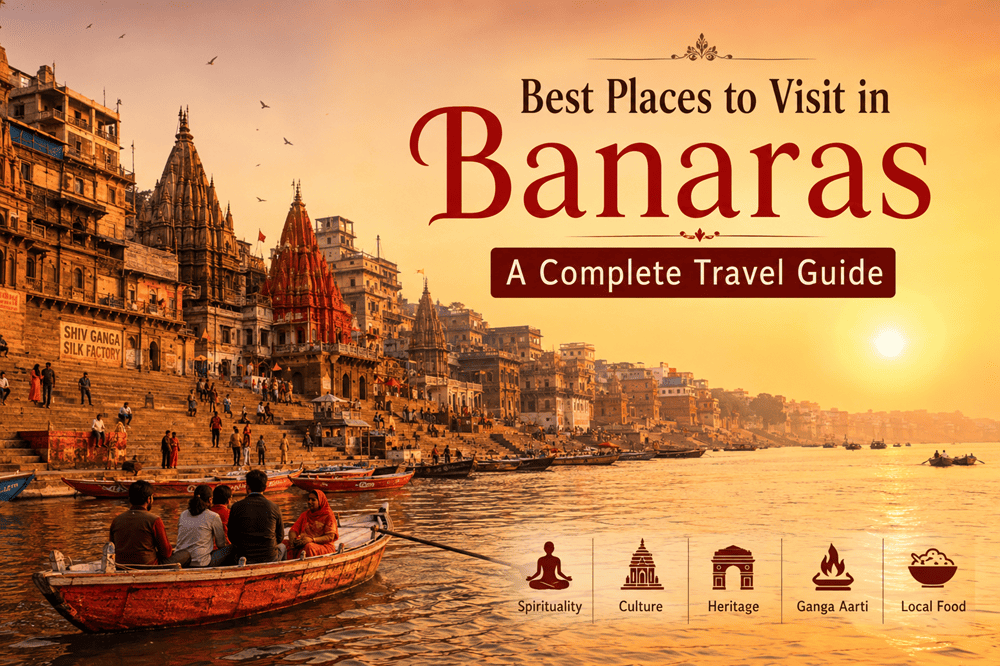
Most visitors arrive in Banaras with the ghats and a handful of temples already at the top of their itinerary, and rightly so, but the city holds a considerably wider range of experiences beyond its most famous spiritual sites. A centuries-old fort across the river, one of India's finest small art museums, a silk weaving tradition recognised worldwide, and food streets that locals themselves consider essential all sit within easy reach of the main tourist circuit, often visited by only a fraction of travellers who make it to the city.
This guide rounds out a Banaras trip with the places that go beyond the ghats and temples most guides already cover, giving a fuller picture of what the city actually offers.
Ramnagar Fort
Sitting on the opposite bank of the Ganges from the main ghats, Ramnagar Fort was built in the 18th century by the Maharaja of Banaras and remains the residence of the former royal family to this day, making it a genuinely lived-in historical site rather than a purely preserved monument. The fort houses a museum displaying vintage cars, weapons, royal costumes and an astronomical clock, offering a different, more courtly side of Banaras's history than the temples and ghats provide. Reaching it involves a short boat ride or a longer drive around via the nearest bridge, and the journey itself offers a genuinely different view of the city from across the water.
Bharat Kala Bhavan
Located within the Banaras Hindu University campus, this museum holds one of India's finest small collections of miniature paintings, sculptures, textiles and archaeological artefacts, many specifically tied to the region's own history. It offers a quieter, air-conditioned counterpoint to a day spent walking the ghats, and is particularly worthwhile for visitors interested in Mughal and Rajput-era miniature painting traditions specifically.
Banarasi Silk Weaving Districts
Banaras has been synonymous with fine silk weaving for centuries, and the city's Banarasi sarees, known for intricate gold and silver brocade work, remain among the most prized in India. Visiting one of the weaving neighbourhoods, particularly around Madanpura, offers a genuine look at the handloom process still practiced by generations of weaving families, and several workshops welcome visitors to watch the weaving itself rather than only shop in a retail showroom.
Sarnath
About ten kilometres from central Banaras, Sarnath is where the Buddha is traditionally believed to have delivered his first sermon after attaining enlightenment, making it one of Buddhism's four holiest sites. The Dhamek Stupa, the ruins of ancient monasteries, and a small archaeological museum housing the original Lion Capital, now India's national emblem, make this a genuinely worthwhile half-day trip and a calmer contrast to the intensity of the ghats.
Man Mandir Observatory
Built in the early 18th century by Maharaja Sawai Jai Singh II of Jaipur, this astronomical observatory sits directly above Man Mandir Ghat and houses a collection of large masonry instruments designed to track celestial movements, similar in concept to Jai Singh's better-known Jantar Mantar in Delhi. It offers both a genuinely different, scientific side of Banaras's history and one of the better elevated views over the ghats and river.
Vishwanath Gali and the Old City Markets
The narrow lane leading toward Kashi Vishwanath Temple, and the surrounding maze of even narrower alleys, function much as they have for centuries, packed with shops selling everything from religious items and brassware to the city's famous silk. Walking through this old city market, even without a specific purchase in mind, offers one of the most immersive, sensory experiences of Banaras available anywhere in the city.
Banaras's Food Streets
Banaras has a genuinely distinct food culture worth building time around specifically: kachori sabzi for breakfast at one of the old city's long-running stalls, thandai and lassi served in traditional clay cups, and the city's specific style of paan, considered among the finest in India by many connoisseurs. The lanes around Kachori Gali and Thatheri Bazaar are particularly worth exploring for anyone genuinely interested in the city's food traditions rather than only its spiritual sites.
A Sunset Boat Ride Beyond the Main Ghats
While a sunrise boat ride along the main ghats is a well-known Banaras experience, extending the same trip further along the river toward Ramnagar Fort or timing it for sunset rather than sunrise offers a genuinely different, less crowded perspective on the same stretch of water most visitors only see at dawn.
Practical Tips for Exploring Beyond the Main Sites
Many of these locations, particularly Ramnagar Fort and Sarnath, are best reached by auto-rickshaw or a hired car rather than on foot, given the distances involved from the central ghat area. Early morning and late afternoon generally offer the most comfortable temperatures for walking the old city markets, and a local guide can be genuinely valuable specifically for the silk weaving districts, where the neighbourhood's layout is not designed with tourists in mind.
Getting Started
A Banaras trip that only covers the ghats and the most famous temples captures a real but incomplete picture of the city. Adding even two or three of the places in this guide, Ramnagar Fort, the silk weaving districts, or a half-day at Sarnath, rounds out the visit considerably and moves beyond the well-worn tourist circuit most first-time visitors never leave.
Frequently Asked Questions
How many days are needed to see Banaras properly, including these additional sites?
Three to four days allows time for the main ghats and temples alongside a proper visit to Sarnath, Ramnagar Fort and the old city markets, without feeling rushed.
Is it worth visiting Ramnagar Fort if time is limited?
If only one additional site can be added beyond the standard ghats-and-temples circuit, Ramnagar Fort offers a genuinely different perspective on the city's history and a good reason to cross the river, which most visitors never do.
Can the Banarasi silk weaving districts be visited without buying anything?
Yes, most workshops are genuinely welcoming to visitors who simply want to observe the weaving process, though a respectful, low-pressure visit rather than an extended browsing session is generally appreciated by working weavers.
Is Sarnath worth visiting for travellers who are not specifically interested in Buddhism?
Yes. Beyond its religious significance, Sarnath offers a genuinely different, calmer historical experience than the intensity of central Banaras, and the archaeological museum housing India's national emblem holds broader historical interest regardless of religious background.